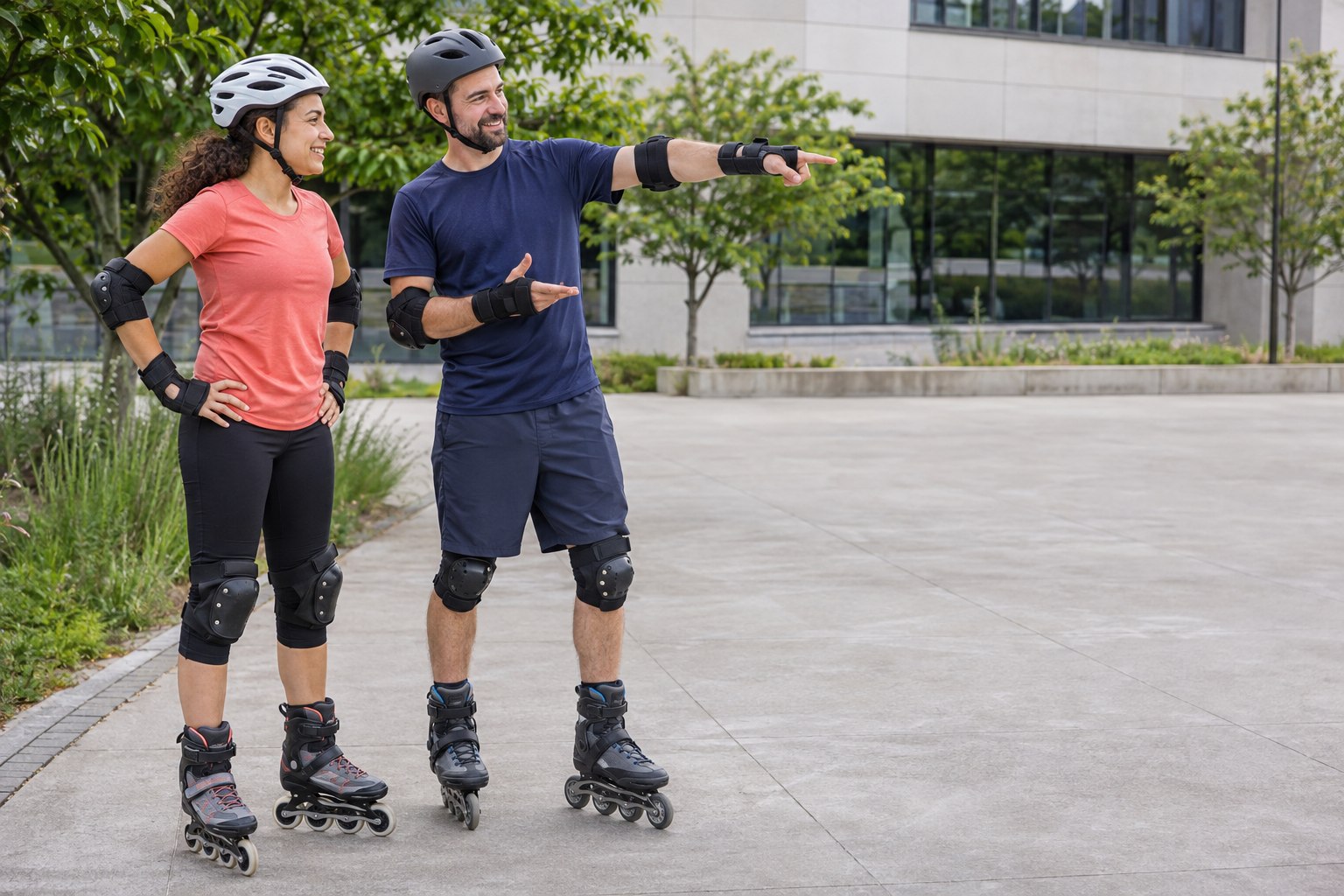
Give the instructor your real starting point
Describe what you have done and where: standing on skates in a rink, a first class, or a previous period of recreational skating. Those descriptions are more useful than calling yourself “intermediate” without context. Ask how the organiser groups learners and how stopping and speed control are taught before participants are expected to use a more demanding area.
Keep a small vocabulary
A lesson might address balance, moving, turning or stopping. Ask what each term means in that class and what the instructor wants you to notice. Do not assume that watching a demonstration establishes the technique or that success on one surface transfers to another. This website helps organise learning questions; it does not replace supervised instruction with a universal sequence of manoeuvres.
Write an observation rather than a score
After a session, use a sentence such as “I practised the instructor’s stopping exercise on the same level court and need feedback on the next attempt.” That keeps the setting and the open question visible. A numerical rating can hide those details. Avoid recording unnecessary information about other participants or publishing a video of someone without their agreement.
Change one practical variable at a time
Discuss progression with the instructor who can observe you. A new surface, a busy path, a longer visit and a different setup can each alter the task; combining them makes a comparison hard to interpret. Keep the next learning goal recognisable. There is no streak, deadline or automated readiness certificate in this journal, and the session card does not recommend a training load.
Original editorial notes · 20 November 2026. Sources & scope. This guide is not personalised instruction or an assessment of a venue.